
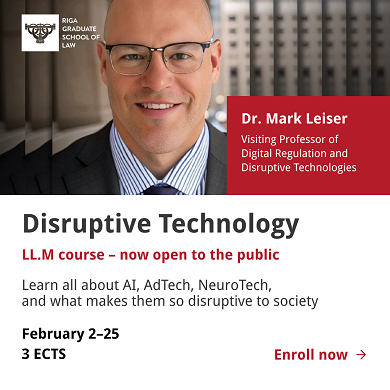
Kursa apraksts
• Laiks: 2.-25. februāris 2026
• Formāts: hibrīds (sesijas auditorijā kombinētas ar attālinātām)
• Kredītpunkti: 3 ECTS
• Cena: €200
• Pieejams: atvērts publiski
• Valoda: angļu
• Pieteikšanās termiņš: 29. janvāris
Digital technologies increasingly shape the decisions made about us—by employers, banks, online platforms, governments, and even the devices we carry in our pockets. From automated hiring systems and algorithmic credit scoring to personalised persuasion and immersive digital environments, these technologies quietly reshape power, autonomy, and everyday life.
Disruptive Technology: Law, Power, and the Future of Everyday Life offers an accessible, legally grounded exploration of the technologies driving this transformation. The course covers artificial intelligence and big data, the Internet of Things, immersive virtual environments, and emerging brain–computer interfaces, with a focus on how these systems influence behaviour, structure choices, and challenge existing legal frameworks.
Using real-world case studies and current policy debates, participants will engage with questions that are central to contemporary digital society:
- When does “personalisation” become manipulation?
- What does meaningful consent look like online?
- How should automated decision-making be regulated?
- Where do fundamental rights fit when systems operate at scale?
The course combines legal analysis with critical perspectives on power, governance, and technological design, equipping participants with tools to assess both the risks and opportunities posed by disruptive technologies.
By the end of the course, participants will have a clear conceptual framework for understanding how digital systems shape behaviour and decision-making, and the confidence to engage critically with ongoing legal and policy debates across Europe and beyond.
Dr M. R. (Mark) Leiser is a Visiting Professor of Digital Regulation & Disruptive Technology and an internationally recognised expert in deceptive design, AI governance, data protection, and platform regulation. He holds a PhD in law and has an extensive scholarly record examining dark patterns, behavioural manipulation, and the legal limits of digital persuasion.
His publications include "Dark Patterns, Deceptive Design, and the Law" (Hart/Bloomsbury), "Critical Reflections on the EU’s Data Protection Regime" (Bloomsbury), and the forthcoming "Artificial Intelligence, NeuroData, and Society: Law at the Edge of Cognition" (Bloomsbury), which explores how NeuroAI challenges autonomy and fundamental rights. His work informs regulators, courts, and policy debates across the EU and beyond.