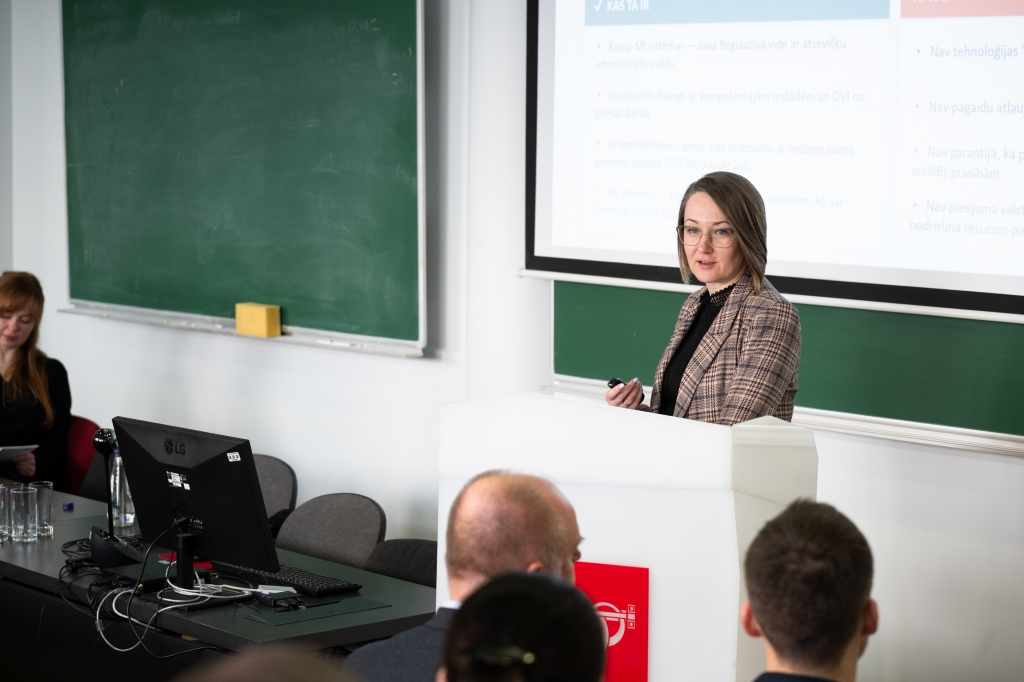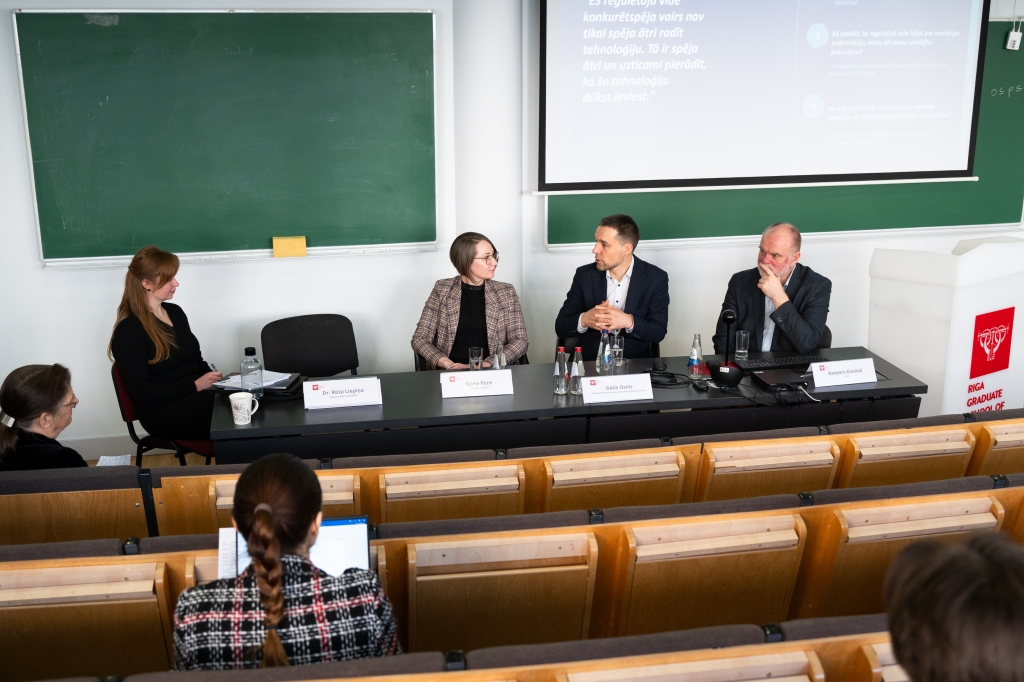
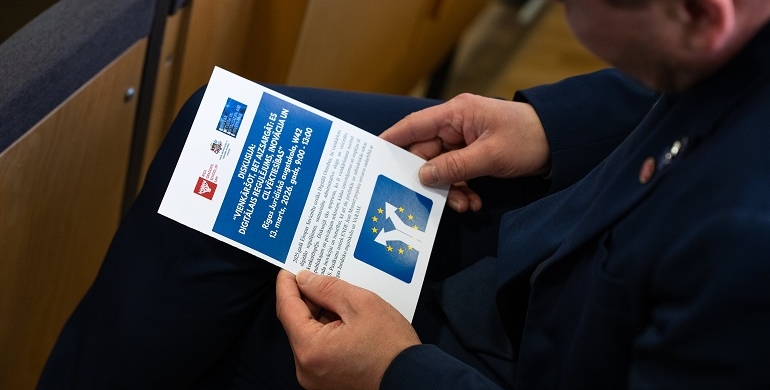
On 13 March 2026, Rīga Graduate School of Law hosted the discussion “Simplify, but Protect: EU Digital Regulation, Innovation and Fundamental Rights,” bringing together policymakers, legal scholars, practitioners, and industry representatives to explore the EU’s new Digital Omnibus approach.
The seminar focused on how the European Union can simplify digital regulation while preserving fundamental rights, legal certainty, and public trust. Discussions examined the practical implementation of the AI Act, the balance between innovation and compliance, and whether simplification strengthens competitiveness or risks weakening important legal safeguards.
Representatives from VARAM, TILDE, and the AI Centre (MI Centrs) shared perspectives from public administration, business, and innovation support, highlighting the role of digital governance, regulatory sandboxes, and responsible AI development.
A key takeaway was that simplification is not only about reducing administrative burdens, but also about maintaining democratic accountability, strong rights protection, and institutional trust. The seminar provided valuable insight from professionals working directly with policy development, compliance, and digital innovation.
The event was organised within the ENDE Jean Monnet project in cooperation with Rīga Graduate School of Law and the Ministry of Smart Administration and Regional Development of Latvia (VARAM).